
Tank vs Tankless Water Heater in Lake Stevens, WA
A tank water heater suits most Lake Stevens homes; a tankless unit lasts longer and saves space. With soft PUD water, scale is less of a concern either way. Choose tankless for endless hot water and tight spaces; stick with a tank for simplicity.
Tank vs tankless: the honest comparison
No hype here — neither type wins on every dimension. Here is how they stack up for a typical Lake Stevens home:
| Tank water heater | Tankless water heater | |
|---|---|---|
| Typical installed cost | Lower — the budget option | Higher — typically 2–3× a tank install |
| Lifespan | 10–12 years | 15–20 years with maintenance |
| Hot water supply | Limited by tank size (40–50 gal typical) | Endless, within the unit's flow rating |
| Install complexity | Straightforward swap in most homes | Often needs gas line upsizing, new venting, electrical |
| Space required | Large closet or garage footprint | Wall-mounted, about the size of a suitcase |
| Energy use | Standby heat loss 24/7 | Heats only on demand — lower operating cost |
| Maintenance | Annual flush recommended | Annual descaling service recommended |
| Best fit | Budget installs, standard households | Large families, long showers, tight spaces |
Scope depends on unit size, gas or electrical upgrades, venting, and code requirements — confirmed with a written quote before work begins.
How does each type actually work?
A tank heater is simple: a 40- or 50-gallon insulated steel tank holds hot water around the clock, reheating as you draw from it. You pay for standby heat loss — energy spent keeping water hot while nobody is home — but the design is proven, parts are cheap, and almost any plumber can service one.
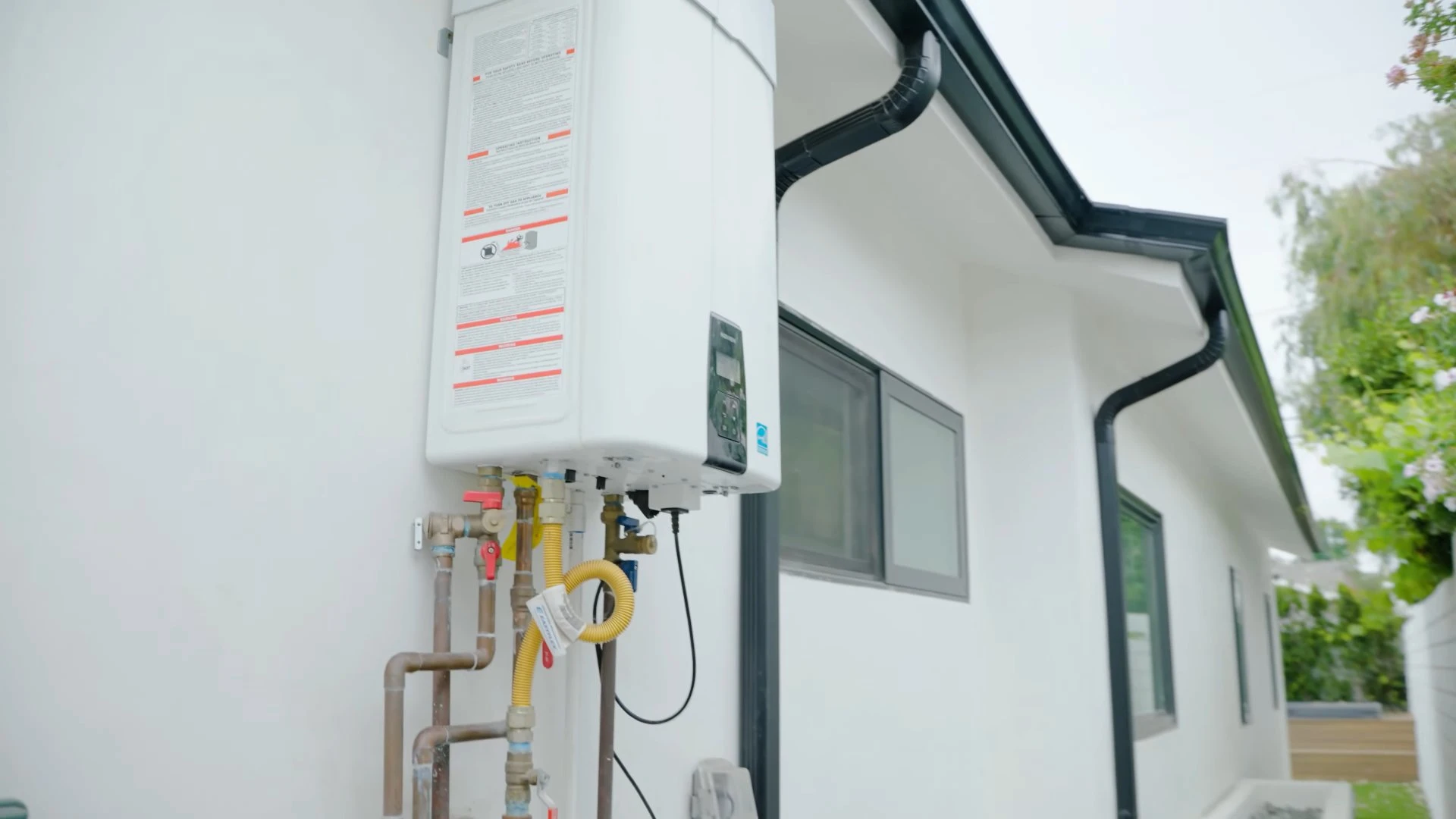
A tankless unit has no tank. When you open a hot tap, water flows through a heat exchanger and a powerful gas burner (or electric elements) heats it on the spot. Nothing is stored, so nothing sits cooling in a tank all day. The tradeoff is power: a tankless gas unit can draw 150,000–200,000 BTU when firing, several times what a tank heater needs. That is why the install is more involved — and more expensive.
What makes tankless installation more complex?
Three things, and they are the reason tankless quotes surprise people. First, gas line sizing: many Lake Stevens homes have a gas line sized for a tank heater's modest appetite, and a tankless unit often needs a larger line run from the meter — sometimes through finished walls. Second, venting: tankless units need dedicated sealed venting (usually through a side wall or roof), which the old tank's vent may not satisfy. Third, electrical: even gas tankless units need a 120V outlet for the controls and freeze protection.
None of this is a dealbreaker — it is routine work for a licensed plumber — but it is real labor and real material, and it is why a tankless install costs two to three times a tank swap. Permits and inspection apply to both. A reputable installer sizes the gas line, plans the vent route, and quotes the whole job in writing before starting, so there are no mid-job surprises.
Does Lake Stevens water favor one type?
Slightly, and in tankless's favor. Tankless heat exchangers are sensitive to scale: hard water coats the narrow passages with minerals, cutting efficiency and eventually killing the unit — which is why hard-water regions need annual descaling. Lake Stevens PUD water is soft at about 73 ppm, so scale builds up far more slowly here. That does not eliminate maintenance — an annual service visit is still smart — but it removes the biggest tankless headache. Tank heaters benefit from soft water too, with slower sediment accumulation, but the advantage is more pronounced for tankless. Read more in our Lake Stevens water quality guide.
Which should your household choose?
Choose a tank if: you want the lowest installed price, your household's hot water use fits a 40–50 gallon tank (typical for 1–4 people with normal shower habits), or you plan to sell within a few years and will not recoup the tankless premium. Most Lake Stevens homes fall here, and there is nothing wrong with it.
Choose tankless if: you regularly run out of hot water (large family, back-to-back showers, big soaking tub), you are tight on space and want the garage or closet footprint back, or you plan to stay in the home long enough for the longer lifespan and lower operating cost to pay back the install premium. Size the unit for your peak simultaneous demand — two showers plus a dishwasher on a cold January morning — not your average day. Undersizing is the most common and most regretted tankless mistake.
Either way, get the sizing and the quote in writing before work starts. Our water heater installation page covers the full process, and when to replace your water heater helps you time the decision.
Last updated: October 2026
Deciding between tank and tankless? Contact Eby Plumbing — we will size both options for your household, check your gas line and venting, and give you written quotes for each so you can compare honestly.
Frequently asked questions
Is tankless better than a tank water heater?
Neither is universally better. Tankless lasts longer and provides endless hot water but costs much more to install. A tank heater costs less upfront and suits most households. The right choice depends on your budget, household size, and how long you plan to stay in the home.
What does switching to a tankless water heater involve?
More than swapping the box. Gas tankless units often need a larger gas line, new stainless venting, and sometimes electrical work for the controls. We size the unit to your household’s simultaneous demand and handle the permit and inspection.
How long do tankless water heaters last?
Tankless units typically last 15 to 20 years with regular maintenance, compared to 10 to 12 years for a standard tank. Lake Stevens has soft PUD water, which means less scale buildup — one of the main enemies of tankless longevity.
Can my home's gas line handle a tankless water heater?
Maybe not without an upgrade. Tankless gas units draw far more BTUs than a tank heater, and many Lake Stevens homes need a larger gas line run from the meter. A plumber should verify gas line sizing before you commit to a tankless unit.
Do tankless water heaters work well with soft water?
Yes — soft water is ideal for tankless units. Hard water causes scale buildup inside the heat exchanger, which is the main maintenance headache for tankless owners. At about 73 ppm, Lake Stevens water causes far less scaling than hard-water regions.
What size tankless water heater do I need?
Tankless units are sized by flow rate and temperature rise, not gallons. A unit must handle your peak simultaneous demand — for example, two showers plus a dishwasher. Undersizing is the most common tankless mistake, so size for your real worst-case morning, not the average day.
Need a plumber in Lake Stevens, WA?
Call Eby Plumbing for same-day service across Lake Stevens and surrounding areas.
Call (425) 555-0132