
Leak Detection in Lake Stevens, WA
Eby Plumbing finds hidden leaks across Lake Stevens, WA with non-invasive methods — thermal imaging, acoustic listening, and moisture testing. We pinpoint the leak first, then open only the wall section the repair needs. Call (425) 555-0132 for a written quote.
What are the signs of a hidden leak?
Hidden leaks rarely announce themselves with a puddle. They show up as secondary clues, and the homeowners who catch them early are the ones who notice small changes. The most reliable early sign is your water bill: if it climbs steadily with no change in how you use water, water is going somewhere it should not. Snohomish County PUD bills make the trend easy to spot if you compare a few months.
Other signs: the sound of running water when every fixture is off, a warm spot on the floor over a hot-water slab line, musty smells in one room, paint that bubbles or stains on a wall or ceiling, and mold that keeps coming back in the same spot. Outside, a patch of yard that stays soggy when everything else dries can mean the water service line is leaking underground. In winter, an unexplained ice patch on the driveway above the service line is the same clue in frozen form.
The simplest home test uses your water meter. Turn off everything in the house — no washer, no ice maker, no irrigation — and watch the meter for ten minutes. If the dial or the digital readout moves, you have a leak. That test takes ten minutes and costs nothing, and it tells us where to start.
How do you find a leak without opening walls?
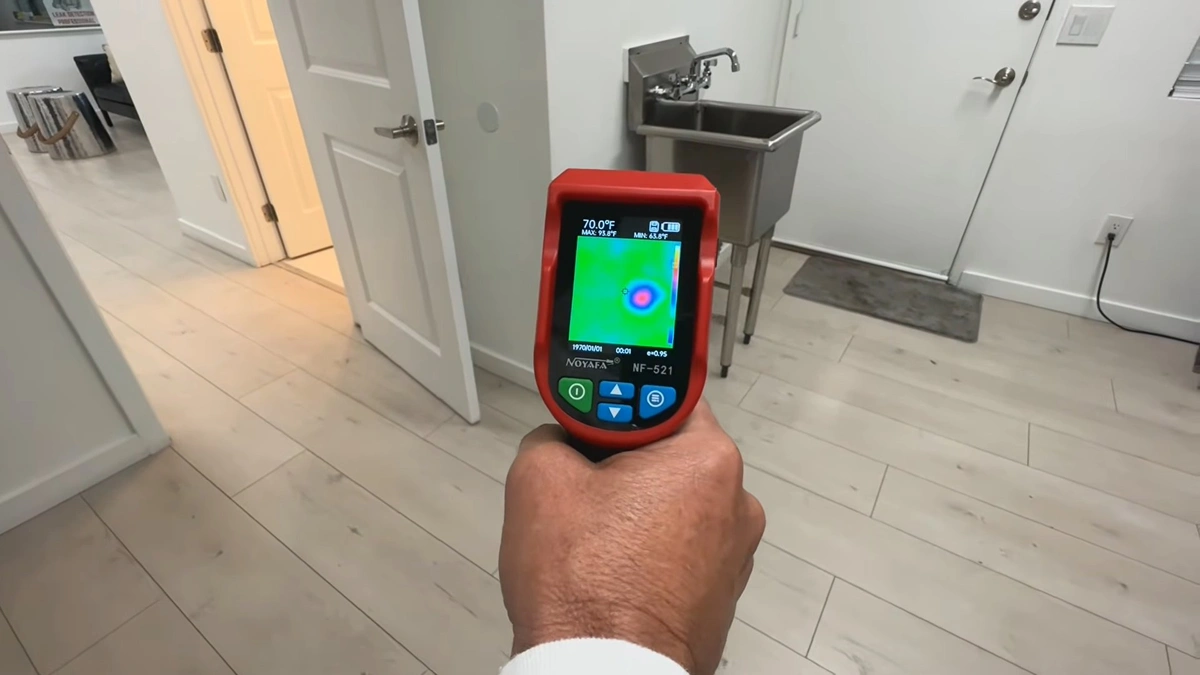
Detection is a process of elimination, and each tool narrows the search. Thermal imaging cameras read surface temperatures: leaking water cools the surrounding wall, floor, or slab, and the camera shows that cool signature as a distinct pattern. It works best on hot-water lines, where the temperature contrast is strongest, and it scans large areas in minutes.
Acoustic listening equipment picks up the sound of water moving through pipes — a pressurized leak has a signature hiss that a trained ear and a sensitive microphone can locate through drywall and slab. Moisture meters confirm what the camera suggests, mapping exactly how far dampness has spread. And pressure testing isolates the suspect: we pressurize individual lines and watch which one drops, which tells us whether the leak is in the hot line, the cold line, or a specific branch.
Used together, these methods typically narrow a hidden leak to a section of wall a foot or two wide. That is the difference between one deliberate opening and exploratory demolition across a room. The goal is simple: cut once, in the right place.
Where do hidden leaks happen in Lake Stevens homes?
The typical Lake Stevens home, built around 1993, has copper supply lines in walls and under slabs, and those joints and fittings are now thirty-plus years old. The common failure points: pinhole leaks in copper where water chemistry and age have thinned the pipe, failed angle stops and supply lines under sinks and behind toilets, shower valve connections inside walls that drip with every use, and slab lines that develop leaks where the pipe meets the concrete.
Crawlspaces deserve special attention. Many Lake Stevens homes have vented crawlspaces, and supply lines there see winter cold. A slow drip in a crawlspace can run for months unnoticed, feeding mold and rot in the floor framing. The January 2024 freeze showed how fast an exposed line can split — but the slow leaks do more total damage because nobody sees them. A yearly crawlspace look with a flashlight costs nothing and catches slow leaks early.
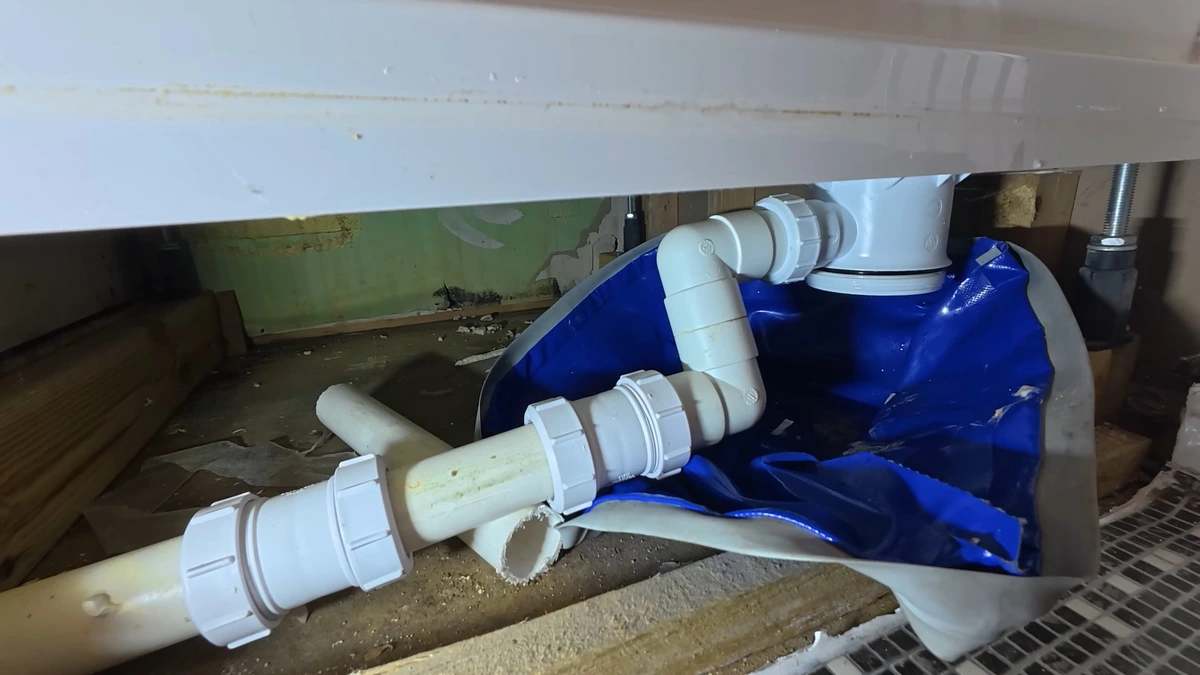
Under-sink leaks are the most common visible ones: a failed P-trap seal, a loose supply connection, or a garbage disposal housing cracked at the seam. They soak the cabinet base quietly until the particle board swells. Check under every sink when you are already down there for something else — thirty seconds, twice a year.
What does leak detection and repair cost?
Detection and repair are quoted separately because they are separate jobs. Detection finds the leak; repair fixes it. Slab leak location is the specialized case because it takes acoustic equipment and more time to pinpoint through concrete.
| Service | Notes |
|---|---|
| Leak detection visit (walls, ceilings, crawlspace) | Thermal, acoustic, and moisture testing as needed |
| Slab leak location | Specialized acoustic equipment through concrete |
| Pinhole leak repair in accessible wall | Includes minimal drywall opening for the repair |
| Under-sink leak repair (trap, supply, disposal) | Most common visible leak we fix |
| Water service line leak repair | Excavation depth and line material drive the price |
Every job is confirmed with a written quote before work begins. Drywall patching and paint after the repair are typically handled by you or your contractor.
Leak symptoms and what they mean
Do the ten-minute meter test with everything off. A moving meter means a leak — call for detection.
A pressurized supply leak. Acoustic equipment locates it through walls and slab.
A hot-water slab line leaking under the concrete. Slab leak location, then a targeted repair or reroute.
Water traveling from a leak above or behind. Thermal imaging traces it back to the source.
Moisture feeding mold inside a wall or under flooring. Find the water first — cleaning the mold without fixing the leak is temporary.
Water service line or irrigation leak underground. We locate it and repair the section.
What happens during a leak detection visit?
We start with your clues: the bill, the sounds, the stains. Then we run the meter test to confirm the leak is real and whether it is on the hot or cold side. Thermal imaging scans the suspect areas, acoustic listening narrows it, and moisture meters map the spread. If the evidence points to one spot, we show you what we found — the camera image, the meter readings — before anything is cut.
Then we quote the repair in writing and do it: one minimal opening, the pipe fixed, the line pressure-tested. You see the failed section and the repair. Drywall patching and paint are left to you or your contractor, and we will tell you exactly what the opening looks like before we cut so there are no surprises.
One honest note: sometimes detection finds that the leak is not plumbing at all — a roof leak traveling down a wall, condensation from a bath fan venting into the attic, or groundwater in a crawlspace. We will tell you that too, and point you to the right trade instead of selling you a repair you do not need.
Related reading
- Contact Eby Plumbing for leak detection or an estimate
- Signs you need a plumber — early warning guide
- Plumbing winterization guide — prevent freeze leaks
- Plumber in Granite Falls, WA and plumber in Snohomish, WA
Last updated: October 2026
Frequently asked questions
How do you find a hidden leak?
With acoustic listening equipment, thermal imaging, and pressure testing — matched to the suspected location. Slab leaks get the most specialized gear. Once the leak is located, the repair is quoted separately, in writing, before any opening is cut.
How do you find a leak without opening the wall?
We use thermal imaging cameras that show temperature differences where water cools the wall, acoustic listening equipment that picks up the sound of water moving through pipes, and moisture meters that map damp areas. Pressure testing isolates which line is leaking. These methods narrow the leak to a small area, so we only open the wall where the repair actually happens — not across the whole room.
What are the signs of a hidden water leak?
Watch for a water bill that climbs without a change in use, the sound of running water when everything is off, warm spots on the floor, musty smells, paint bubbling or staining on walls and ceilings, and mold appearing in one spot. Outside, a soggy patch of yard that never dries can mean a service line leak. Any one of these is worth a call before the damage spreads.
Will leak detection damage my walls or floors?
No. Detection itself is non-invasive — cameras, listening equipment, and meters all work from the surface. We only cut drywall once the leak is pinpointed, and only as much as the repair requires. That is the whole point of detection: one small, deliberate opening instead of exploratory demolition across the room.
My water bill doubled. Is that a leak?
Very often, yes — especially if your usage has not changed. A running toilet can waste hundreds of gallons a day, and a supply-line leak underground does the same silently. Check your water meter: with everything off in the house, if the meter is still moving, water is going somewhere it should not. That ten-minute check costs nothing, and we can take it from there.
Do you repair the leak after you find it?
Yes. Detection and repair are usually the same visit. Once the leak is located, we quote the repair in writing and do the work — cutting the minimal opening, fixing the pipe, and pressure-testing the repair. Drywall patching and paint are typically left to you or your contractor; we will tell you exactly what the opening looks like before we cut.
Need a plumber in Lake Stevens, WA?
Call Eby Plumbing for same-day service across Lake Stevens and surrounding areas.
Call (425) 555-0132